Across Africa, the organisations that cannot afford to lose contact have spent years building reliable narrowband networks. Mines, metros, utilities, private security and emergency services depend on DMR and TETRA to do exactly what those technologies were designed for: deliver dependable, instant voice inside a defined coverage area. That investment is sound, and it still works.
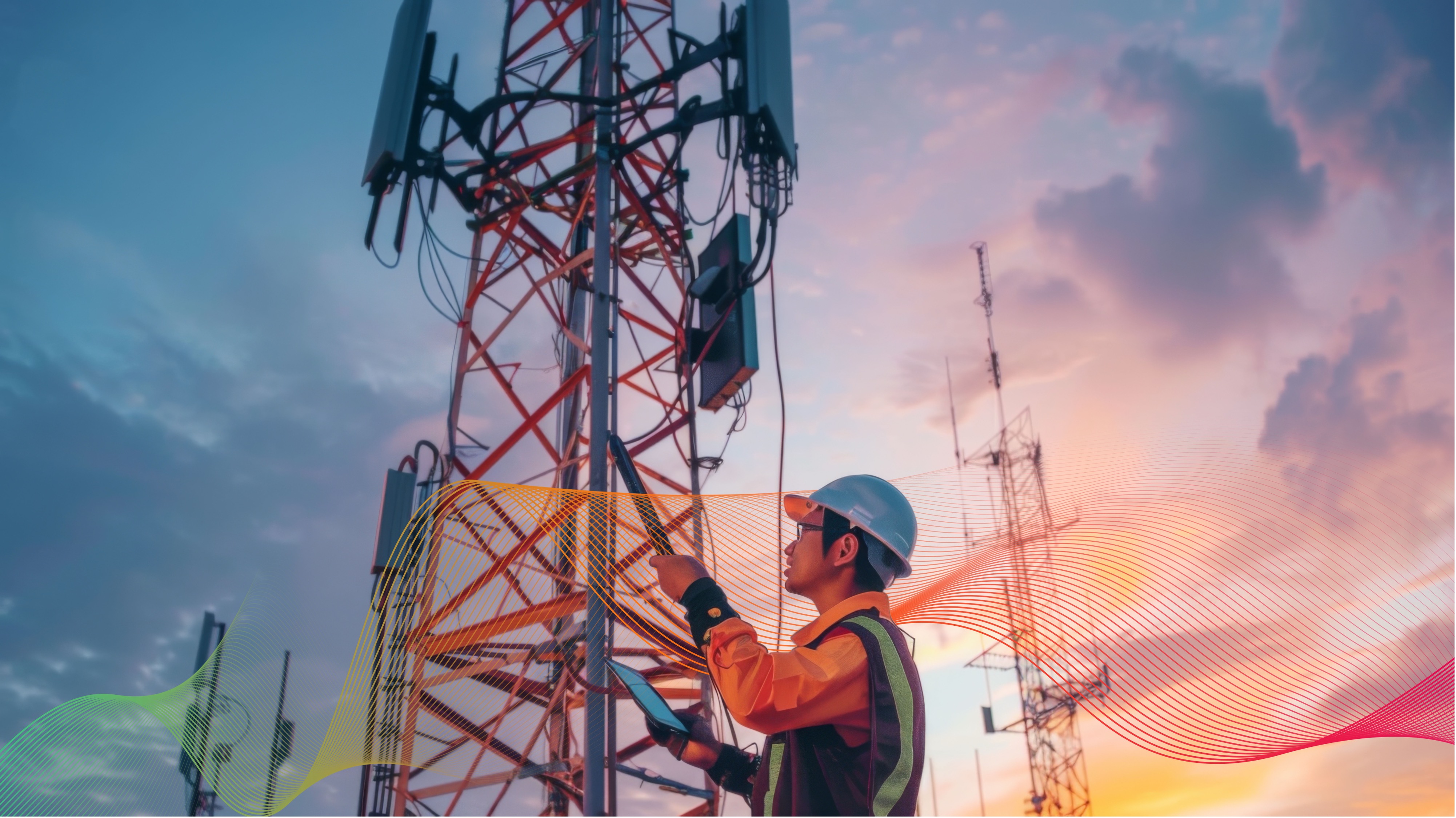
The pressure starts at the edge of the coverage. Teams move beyond the reach of the network every day, across sprawling sites, between towns, and into the rural corridors where the infrastructure was never built. A security response vehicle leaves the estate. A maintenance crew travels to a remote pump station. An officer follows an incident past the last repeater. In that moment, the radio goes quiet, and the operation loses the one thing it relies on most.
The coverage question every African operator faces
The instinct is to treat this as a choice between two futures: keep the trusted narrowband network, or move everything to broadband. Both options carry real cost. Replacing a working radio estate is expensive, disruptive, and risky for teams who trust their current kit. Standing still, meanwhile, leaves crews without coverage the moment they step outside the network and without the video, imagery and data that modern operations increasingly need.
There is a more practical answer, and it suits African conditions particularly well.
One device, continuous coverage
Coexistence means a single device connects to the narrowband network wherever that network reaches, and moves onto broadband to extend coverage everywhere else. Dual-mode radios carry both Push-to-Talk over Cellular and DMR or TETRA in one handset. Inside the coverage footprint, the radio behaves exactly as it always has. Beyond it, the same device stays connected over LTE and 5G, using the cellular coverage that now stretches across most of the continent.
For the user, nothing changes about how they work. They press to talk and they are heard. What changes is the map. The coverage area is no longer bounded by where the towers and repeaters happen to reach. It follows the team wherever the operation goes.
What broadband adds once the coverage gap closes
Extending reach is the first benefit. The second is capability. Broadband carries what narrowband voice cannot: live video from an incident, images from the field, precise location, panic alerts that open a video feed to the control room, and secure messaging that keeps a record. Those capabilities feed directly into the control room and into the evidence trail that security and law enforcement customers depend on. Coverage and intelligence arrive together, on the same device.
Where neither network reaches
Parts of Africa sit beyond both narrowband and cellular coverage. Deep mine shafts, remote water infrastructure, agricultural land and border regions still fall dark. Satellite IoT connectivity through Kineis closes that final gap, keeping assets and sensors reporting where terrestrial networks stop. Layered together, narrowband, broadband and satellite give an operation genuine coverage continuity from the busiest urban site to the most isolated field asset.
Migrating at your own pace
This approach protects the money already spent on radio infrastructure while extending what it can do. Existing DMR and TETRA networks stay live, gateways keep them connected, and broadband grows the coverage and capability around them over time. Organisations move at the pace their budgets and operations allow, with no forced replacement and no gap in service during the transition. For agencies that need public-safety grade performance, MCx provides the next step when they are ready to take it.
For African operators managing wide geographies, uneven coverage and constrained capital, that flexibility is the point. The network extends to meet the operation, rather than the operation being limited by the network.
Building on 50 years of mission-critical experience
Sentiv is an authorised Hytera distributor and service centre, and South Africa's leading mission-critical communications provider, with more than 50 years in the industry. Dual-mode devices, network gateways, MCx, satellite IoT and locally hosted, POPIA-compliant platforms let customers bridge narrowband and broadband on their own terms. As a B-BBEE Level 1 company, Sentiv is well placed to support public sector and enterprise operations across the continent.
To talk through what coexistence could look like for your operation, contact us at info@sentiv.com or visit sentiv.com.