Brian Pinnock, Head of Go-to-Market at Sentiv
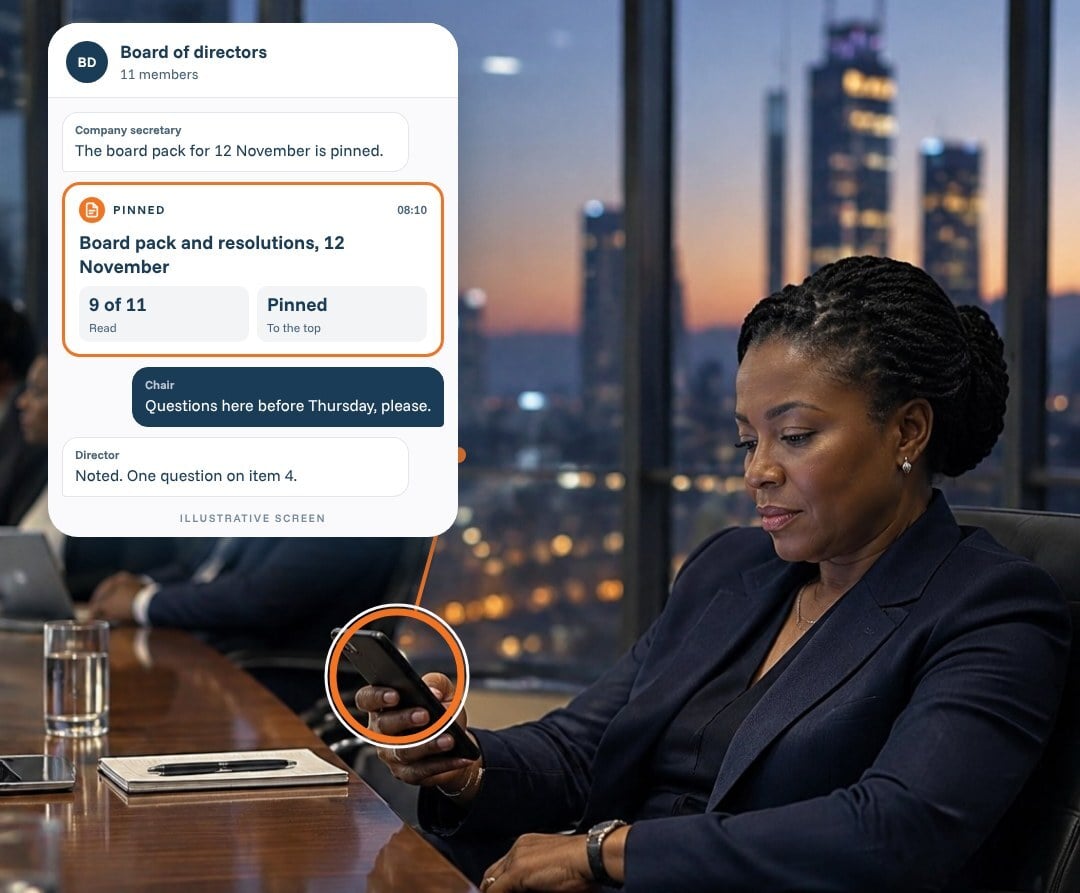
One of the clearest changes I'm seeing in customer specifications is the growing expectation that communications and operational data should work together. More organisations are asking for push-to-talk, video, panic alerts, and asset monitoring within the same solution.
For years, organisations often bought these systems separately. A customer would invest in radios, install cameras through another provider and add sensors later. Each system could do its job, but operators were left trying to piece together information from different screens.
Traditional radio will remain essential, even as broadband push-to-talk grows. Most customers will use both for years, increasingly as part of a wider operational system.
Technology spending will face closer scrutiny
For South Africa's critical infrastructure operators, I expect spending to focus on protecting revenue and reducing avoidable losses.
Water is a good example. South Africa's Department of Water and Sanitation reported 48% non-revenue water in 2025. This includes water lost through leaks and other physical losses, as well as water supplied but not paid for.
Pressure and flow monitoring can flag developing faults, provided the information reaches someone able to investigate and respond.
Theft and vandalism create similar pressures elsewhere. ICASA's 2026 State of the ICT Sector report shows that telecommunications operators' expenditure associated with theft increased from approximately R69.6 million in 2024 to R201.5 million in 2025. I expect that to drive investment in earlier detection and faster response.
Connectivity will become more flexible
LTE works where coverage is available, while private radio remains useful for operations that need dependable communication across a particular site. Satellite connectivity is becoming another option for infrastructure located beyond conventional networks.
One development I expect to become more significant in 2027 is low-power satellite IoT. Kinéis completed its constellation of 25 satellites in March 2025, expanding the possibilities for connecting remote devices that send relatively small amounts of information. Sentiv is working with this technology to extend monitoring into areas where cellular coverage is unavailable.
A borehole sensor might send only a few readings daily, yet still help operators monitor remote infrastructure.
Satellite IoT will not replace the networks needed for continuous voice or high-bandwidth video. Its value lies in keeping remote assets visible without requiring the same connectivity infrastructure as a conventional communications network.
Integration needs to reach the person responding
Many organisations still have systems purchased at different times, from suppliers whose products were never designed to work together. Even when information can be shared, the operational process may not have changed.
For example, an alarm that reaches an unattended email inbox at two in the morning. The system has detected something, but the response still depends on somebody noticing the message.
My advice would be to start by identifying the events that genuinely require action. Agree on who needs to receive each alert, how they will be reached and what should happen afterwards. Once that process works, automation can make it faster and easier to manage.
AI will help operators deal with the volume of information
Video analytics can identify unusual activity around infrastructure. AI can help transcribe radio conversations and filter repeated alarms, leaving operators with a more manageable picture of what requires attention.
Predictive maintenance needs good historical data, which many organisations still lack. I would be more cautious about autonomous decisions.
Gartner predicts that more than 40% of agentic AI projects will be cancelled by the end of 2027, citing escalating costs, unclear business value, and inadequate risk controls.
An incorrect automated decision in a control room could send responders into a dangerous situation or interrupt essential equipment. For 2027, I would keep people responsible for decisions with those consequences. AI can help them assess information and maintain the operational record.
Rail and water will test how well systems work together
South Africa's freight rail network is preparing for a significant change. Transnet Rail Infrastructure Manager signed access agreements with 11 private train operating companies in May 2026, with operations expected to begin progressively.
More operators sharing the same infrastructure will need reliable contact with the infrastructure manager, including along corridors affected by uneven coverage and theft.
Water has its own pressures. The Water Services Amendment Bill proposes a licensing system for water service providers and stronger oversight of service delivery. For municipalities already struggling with losses and ageing infrastructure, better operational information will be important.
I expect more water utilities to start using IoT to make adjustments remotely. If sensors detect a change in pressure or flow, operators could respond by adjusting a valve without sending a team to the site. That could save time, particularly across large municipal water networks. Both sectors show why connected operations will become increasingly important.
By the end of 2027, I expect customers to judge their technology investments by how quickly they identify problems, alert the right people, and record the response. That is where connecting communications and operational data will prove its value.